From 3 to 7 June, the fourth Hometown Bazaar Carnival was held at Victoria Park in Hong Kong. Organised by 30 hometown associations, the five-day event featured 370 themed stalls and 1.1 million items of mainland specialty produce, drawing hundreds of thousands of visitors. Among the highlights was a group of eight Jiangxi enterprises, brought together by Yuhu Cold Chain and the Hong Kong Federation of Jiangxi Associations. Showcasing renowned local specialties such as Pengze crayfish and Guangchang white lotus seeds, their stalls became one of the most popular attractions at the bazaar.
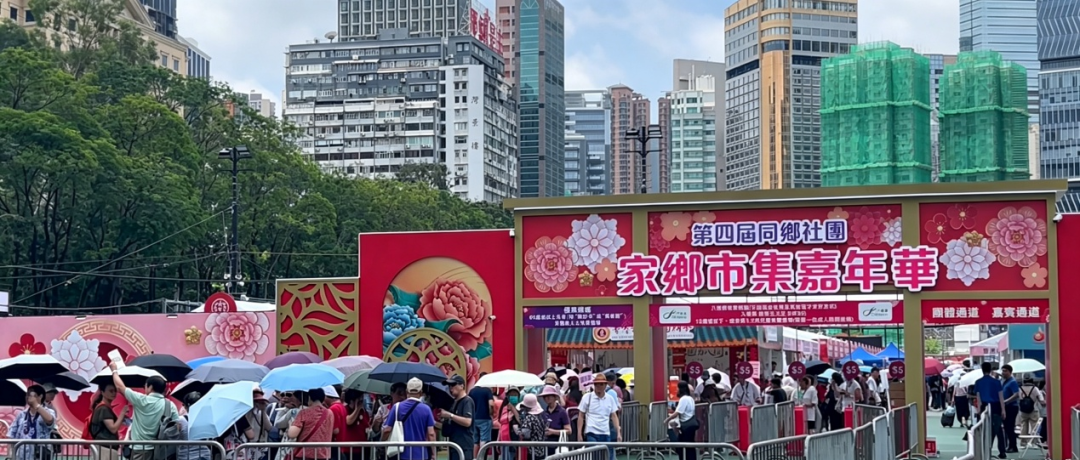
▲ Despite the summer heat, Hong Kong residents queued under umbrellas, undeterred in their enthusiasm to get in.
A Taste of Jiangxi Arrives in Hong Kong: Hometown Flavours Dazzle Victoria Park
Over 90% of Hong Kong’s food is imported, yet Jiangxi’s produce was virtually unknown here until now. Pengze crayfish from Jiujiang, white lotus seeds from Guangchang in Fuzhou, Yanshan scalded rice noodles from Shangrao, and shiitake mushrooms and wood ear fungus from Ruijin in Ganzhou — these celebrated specialties from the Gan–Poyang region had to win over Hong Kong one taste at a time.
“What’s this?” was the question most often heard at the stalls.
Yuhu Cold Chain staff patiently explained: “Guangchang is known as China’s hometown of white lotus seeds. The fresh lotus seeds are sweet and tender — there’s no need to thaw them; eighteen minutes in cold water brings back their original flavour.” Curiosity turned to surprise, and surprise into sales. Traditional taosu pastries from the “Yiliuxiang” brand of Ruichang, Jiujiang, were also a hit — not too sweet, not too rich, crisp with a hint of egg, awakening many a forgotten taste memory.
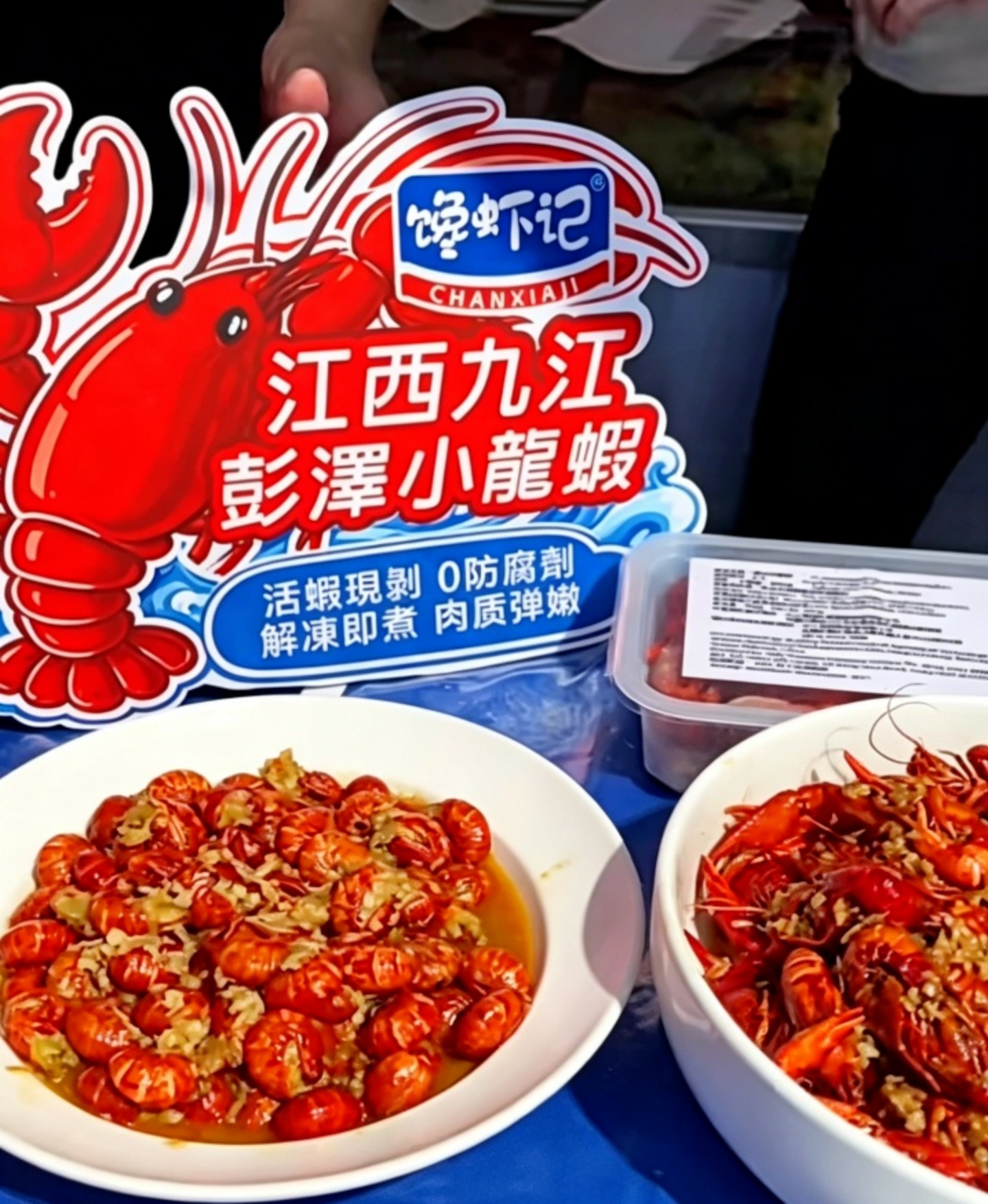
▲ Freshly cooked Pengze crayfish
“I haven’t stopped thinking about it since yesterday’s tasting — save me three boxes,” said one of several young visitors crowding round the stall. Nearby, a woman lifted a crayfish tail to inspect it closely. “So fresh,” she said, “it looks like it was just pulled out of the water.” Day after day, the crayfish from Pengze, Jiangxi, drew the same praise.
For Hong Kong residents, these Jiangxi products offered more than a fresh taste — they reshaped perceptions, proving that Jiangxi’s quality can hold its own against imported goods in this international city.
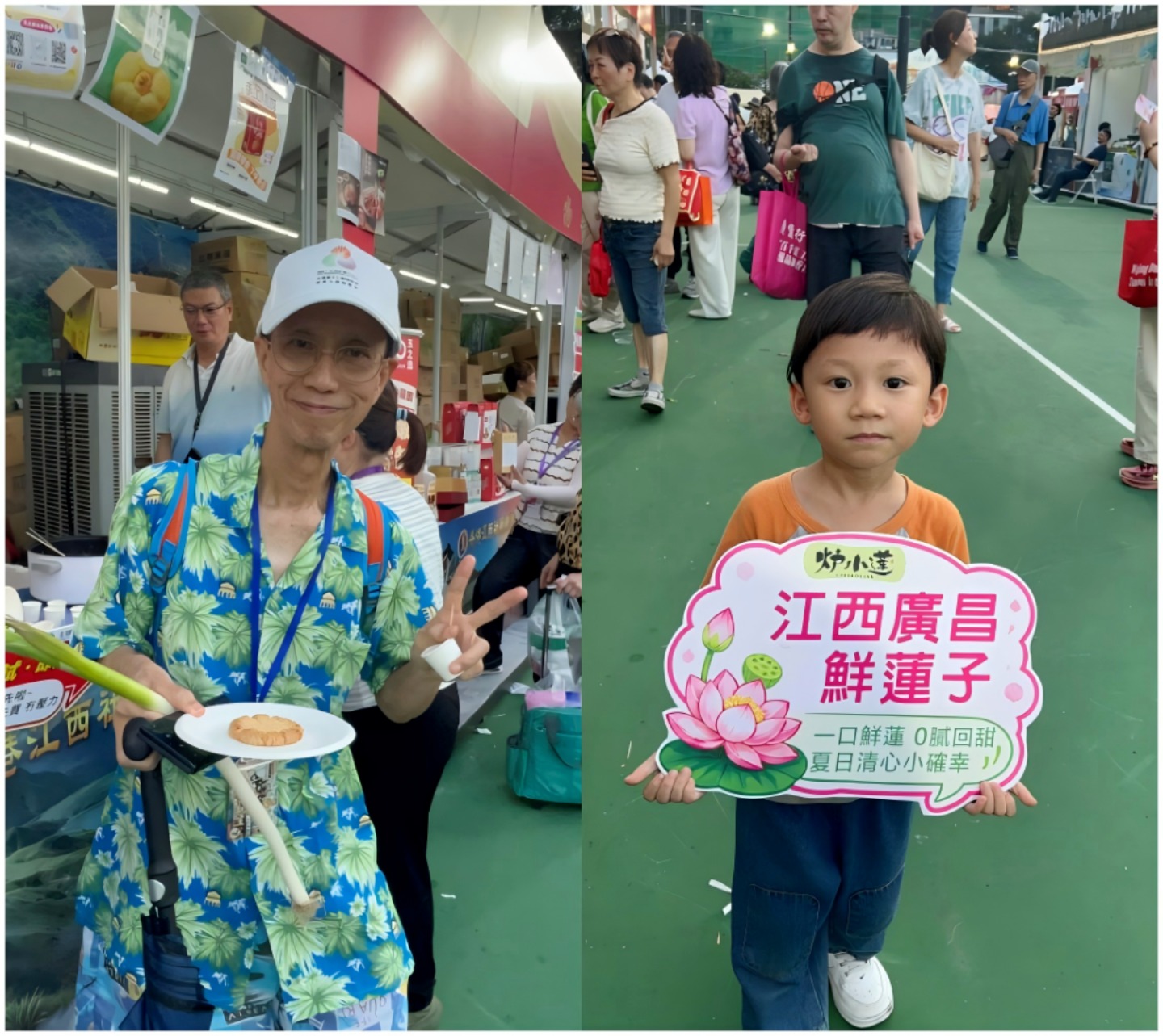
▲ Hong Kong residents give Jiangxi’s quality produce a thumbs-up
As night fell and the bazaar lit up, queues still stretched in front of the Jiangxi stalls. A representative from crayfish brand Chanxiaji (lit. "crayfish so good they'll make your mouth water") prepared tasting samples while exchanging business cards with Hong Kong food-service buyers. In just a few days, the stalls welcomed close to 10,000 visitors and opened follow-up discussions with several local supply chain companies.
Breaking Through: End-to-End Services Give Companies the Confidence — and the Capability — to Go Global
For mainlanders living in Hong Kong, the taste of Jiangxi at Victoria Park offered comfort for homesickness. None of this would have been possible without the behind-the-scenes work of the Hong Kong Federation of Jiangxi Associations — sourcing goods, coordinating stalls, and rallying support, with the Federation’s chairman lending his personal presence and several Jiangxi-affiliated association leaders bringing their own delegations. Working hand in hand with Yuhu Cold Chain, the Federation delivered a tangible sense of warmth to Jiangxi natives in Hong Kong.
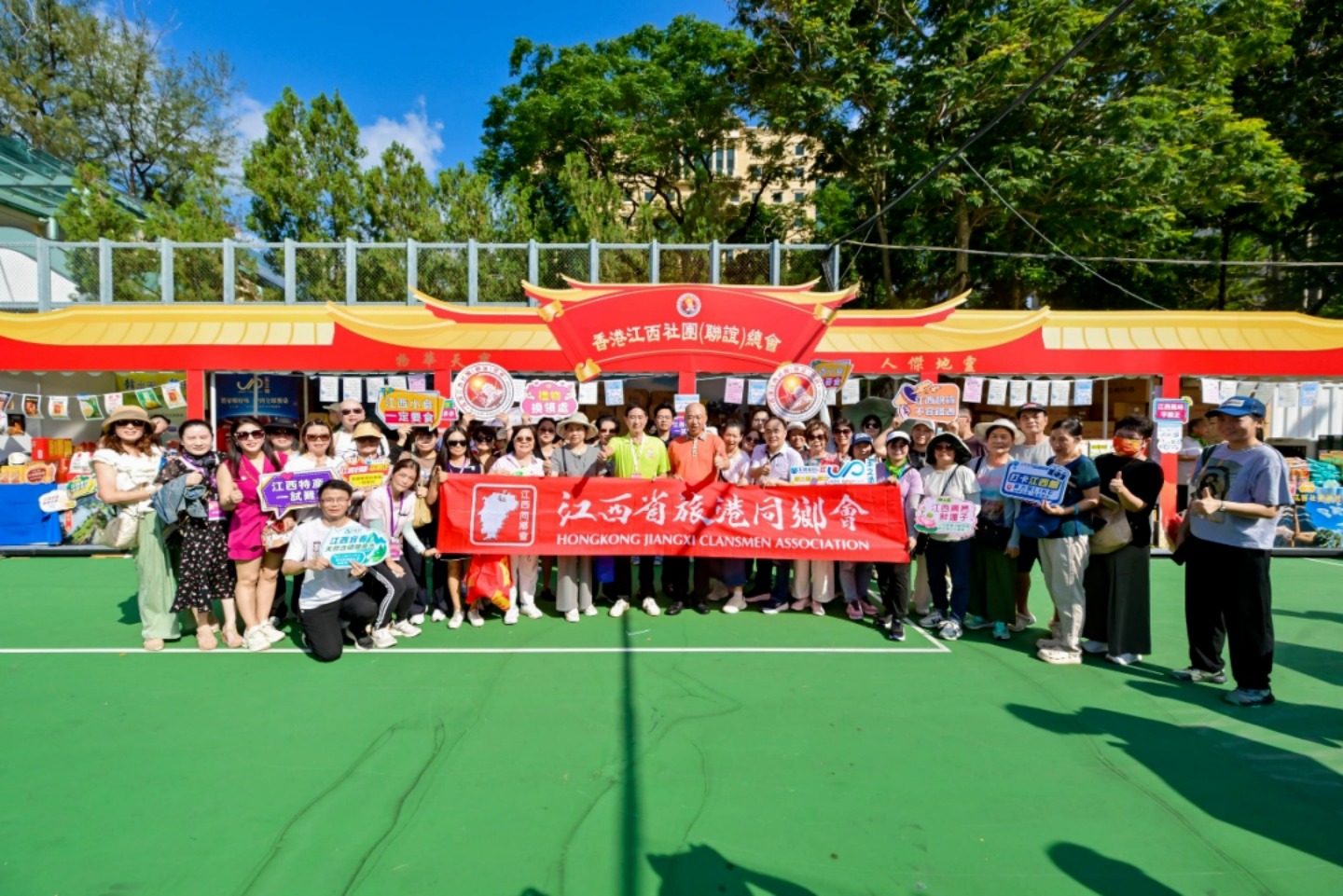
▲ Wang Zaixing, Chairman of the Hong Kong Federation of Jiangxi Associations; Chen Chenglu, President of the Jiangxi Natives’ Association in Hong Kong; and Zhang Longju, Executive Vice President of the Jiangxi Natives’ Association in Hong Kong, led delegations to the event
Traditional agricultural distribution is like a long relay race — farmers, buyers, wholesalers, retailers — with loss and mark-ups at every handover. “It’s not that we didn’t want to go global before,” one company representative admitted. “We just didn’t dare to, and didn’t know how.”
What Yuhu Cold Chain does is shorten that chain, connecting origin directly with end markets — supporting not only domestic circulation, but also the first stop for going global: Hong Kong. This means producers no longer have to navigate certification, logistics, customs clearance, and distribution channels on their own; instead, they can rely on the one-stop service of Yuhu Cold Chain’s import-export trade platform.
Yuhu Cold Chain’s first trading centre, located in Huadu District in the northern part of the Guangdong-Hong Kong-Macao Greater Bay Area, is a National Backbone Cold Chain Logistics Base. The Centre’s first origin-themed pavilion — the Greater Bay Area Jiangxi Pavilion — is becoming an important springboard for Jiangxi’s quality and specialty enterprises to reach larger markets and the global economy.
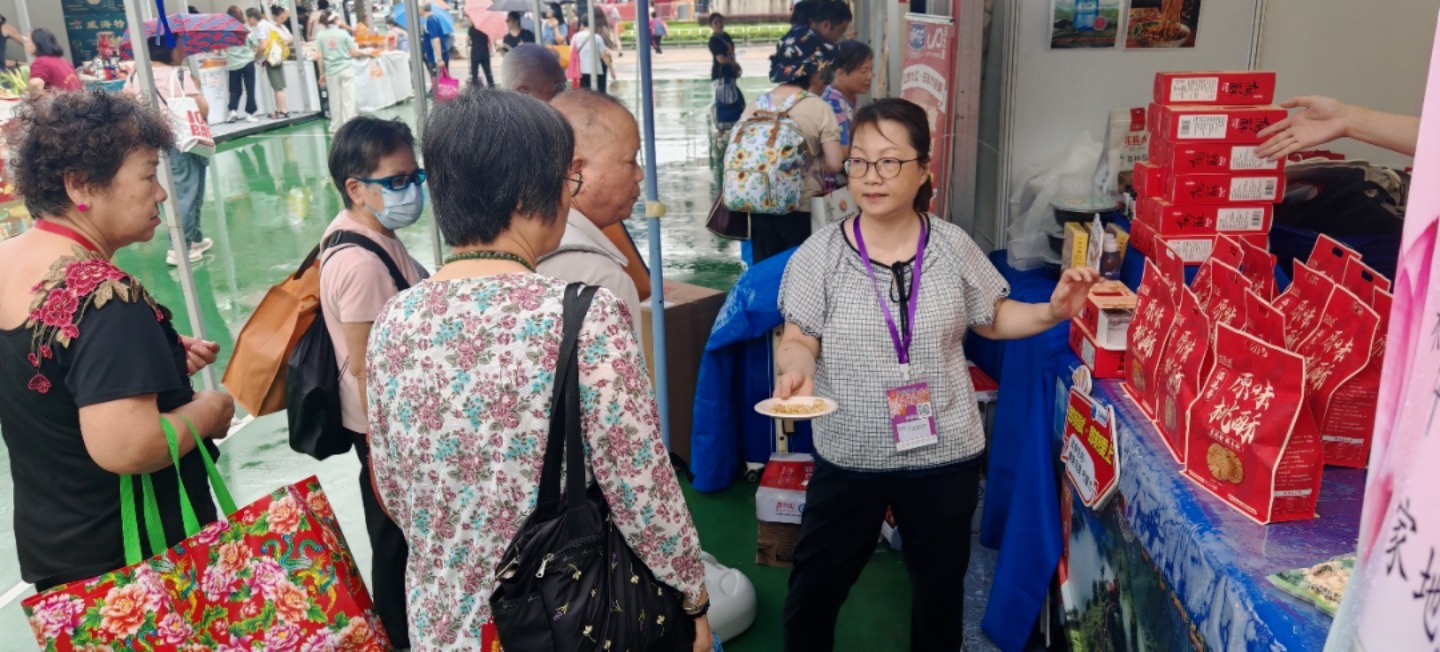
▲ Staff enthusiastically introduce products to Hong Kong residents
Take Chanxiaji and Luxiaolian as examples: Yuhu Cold Chain provides near hands-on, end-to-end support for going global — from sorting out product certifications and upgrading packaging, to customs compliance and adapting to Hong Kong’s food safety standards. Every step comes with dedicated guidance, and the time it takes for products to reach Hong Kong has been cut to under 24 hours.
Yuhu Cold Chain has now established province-wide partnerships with Jiangxi and Shandong, helping numerous products clear the “last mile” of compliance for supply to Hong Kong and showcasing them at major international trade fairs. With Yuhu’s support, products such as Jiangxi’s Guoran Juice and Hebei’s Yaomu Knife-cut Noodles (Daoxiao Noodles) have obtained “Hong Kong Registration” certification for food supplied to Hong Kong, issued by the Hong Kong Quality Assurance Agency (HKQAA), and overseas orders are now flowing in for a growing number of companies.
The Secret of Freshness: An Invisible Cold Chain, A Taste You Can Trust
In Hong Kong’s wet markets, Boston lobster and Norwegian salmon are common sights, but a box of springy, sweet freshwater crayfish from Poyang Lake is a rare find. The reason: freshwater seafood has an extremely short shelf life, and by the time it reaches Hong Kong through conventional cold chain logistics, much of its flavour has already faded.
The crayfish that won such praise from Hong Kong residents owe their quality to flash-freezing with liquid nitrogen. Sorted, cleaned and frozen within the shortest possible time after catch, the crayfish are locked at −196°C in a matter of seconds, sealing in their tender, springy texture. What cross-border supply to Hong Kong has long lacked is precisely this kind of supply chain — one capable of locking in the freshness of freshwater seafood.
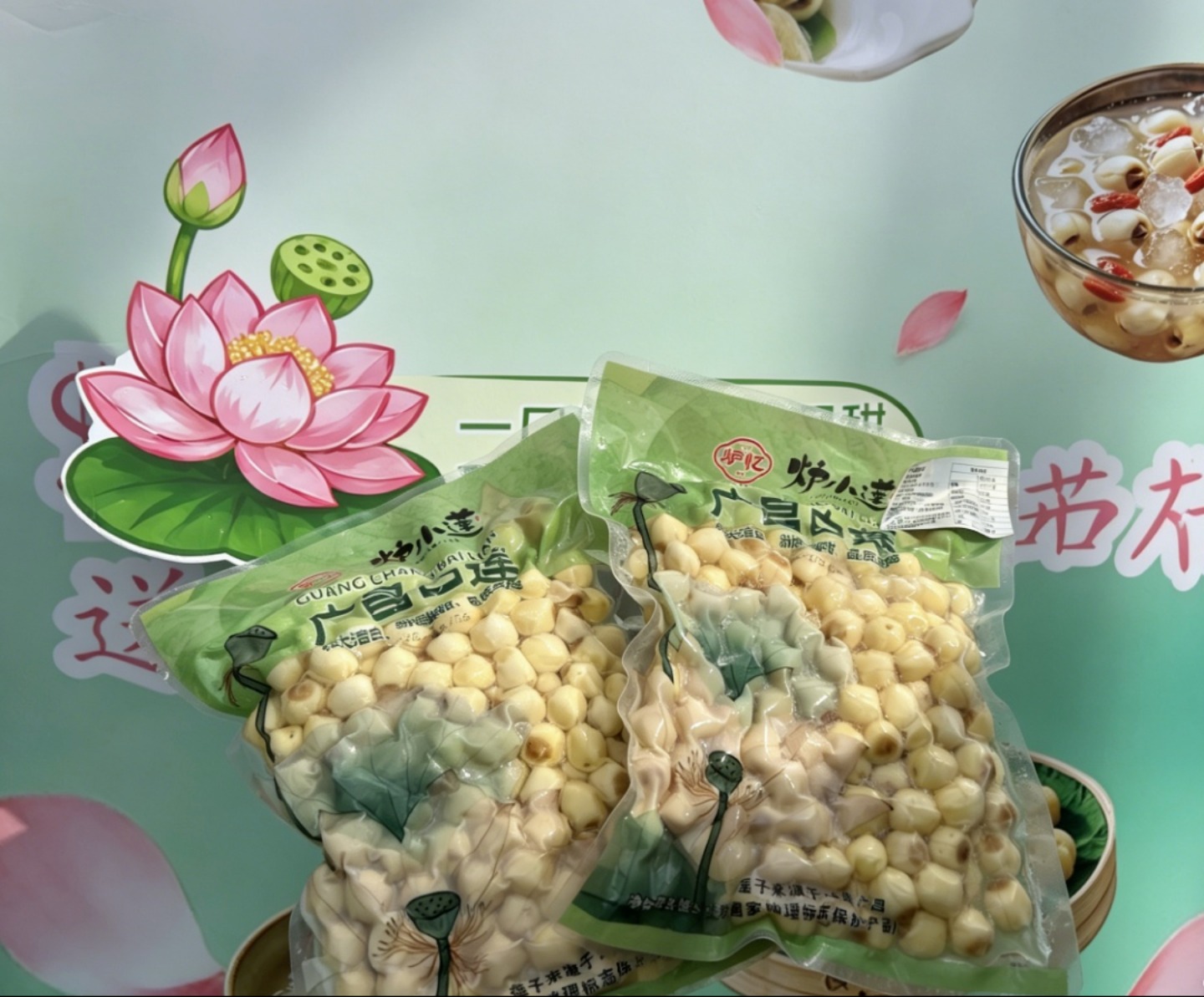
▲ An end-to-end cold chain ensures Guangchang white lotus seeds reach Hong Kong fresh
Guangchang’s white lotus seeds are even more delicate. Fresh lotus seeds are at their best for only a few days after harvest, and traditional dehydration strips away most of their flavour. Luxiaolian instead uses quick-freezing technology, locking in freshness within hours of picking so that, once thawed, the seeds retain eighty to ninety per cent of their original taste. What stands between the white lotus and silver fungus soup in a Hong Kong bowl and the fresh lotus seeds just shelled by a Guangchang pond is Yuhu Cold Chain’s end-to-end traceability system.
Luxiaolian has now set up a forward warehouse at Yuhu Cold Chain (Guangzhou) Trading Centre: freshly picked lotus seeds are flash-frozen and transported to Guangzhou, where they are stored in precisely temperature-controlled cold storage, ready to be loaded and shipped on demand. The cycle from order to shelf has been compressed to the absolute minimum — for delicate ingredients, every day saved means one more degree of quality preserved.
The bazaar will eventually close, but this near-thousand-mile channel will not. Across the Gan–Poyang region, the crayfish season continues and Guangchang’s white lotus harvest is about to reach its peak. Together with Yuhu Cold Chain, these premium Jiangxi products will keep travelling to the world — and a path to going global that once seemed out of reach is being paved, one step at a time.
Behind the brisk sales at the Hometown Bazaar Carnival lies what Yuhu Cold Chain has quietly built: a standardised, end-to-end support system forming an efficient cross-border ingredient channel — from the Gan River to Victoria Harbour, from the field to the table.