The South China Sea summer fishing moratorium ended on 16 August, followed by the Bohai Sea and the Yellow Sea on 1 September. By mid-September, fishing will have resumed across all of China's sea areas.
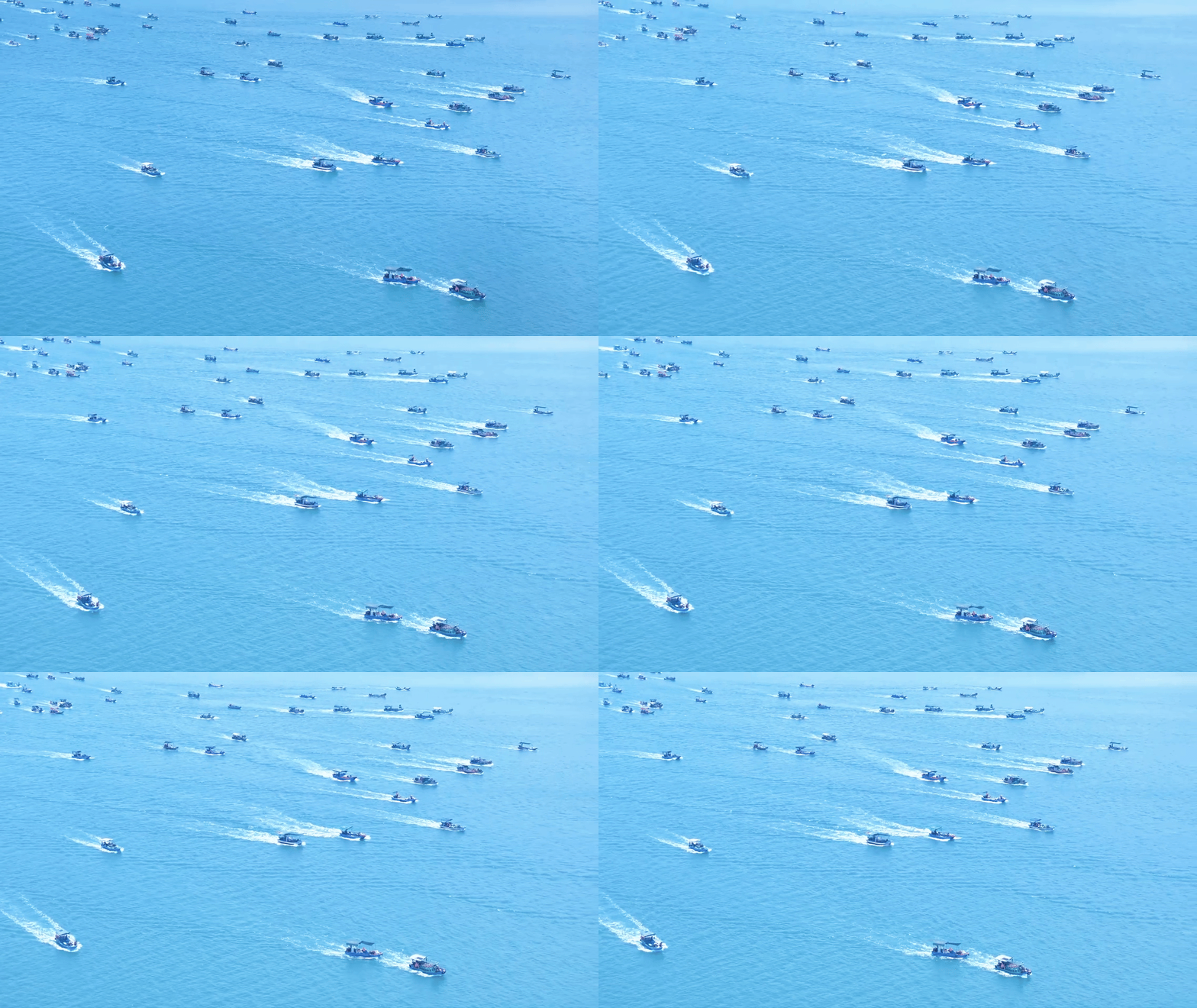
Fleets set out for the fishing grounds as the South China Sea season opens (Image: Kanjian Xiang'an / See Xiang'an)
Market data shows landings have risen steadily in the fortnight since the South China Sea reopened, pushing prices to their lowest point of the year. This is the best-value window of the year for seafood procurement — and the ideal restocking moment for food traders, domestic and overseas buyers, distributors and processors across the supply chain.
From Quay to Trading Centre in an Hour
In the small hours at the fishing ports of eastern Guangdong, the lamps are still burning. Returning boats tie up, basket after basket of seafood comes ashore, iced water dripping from the rims, the air thick with the smell of the sea.
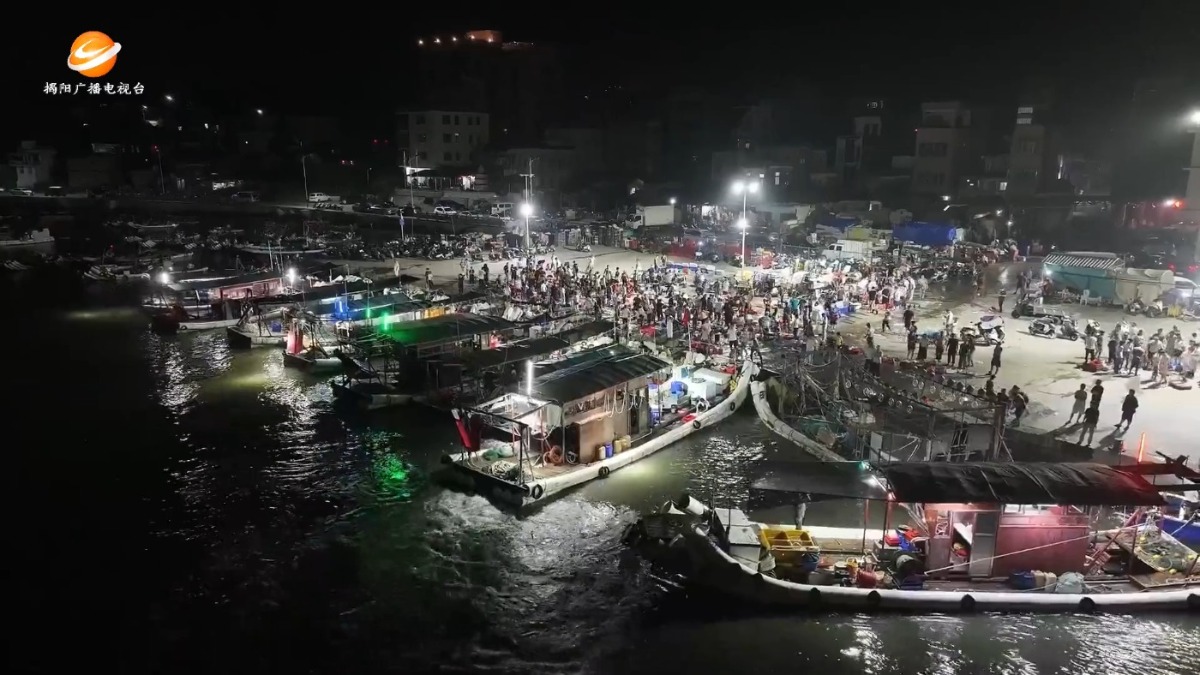 Boats berthing at Shenquan Aojiao Wharf before dawn (Image: Jieyang Guangdian / Jieyang Broadcasting)
This freshly landed catch sets out from Shenquan in Huilai, Sanbaimen in Raoping and other eastern Guangdong ports for a single destination — Yuhu Cold Chain (Jieyang) Trading Centre.
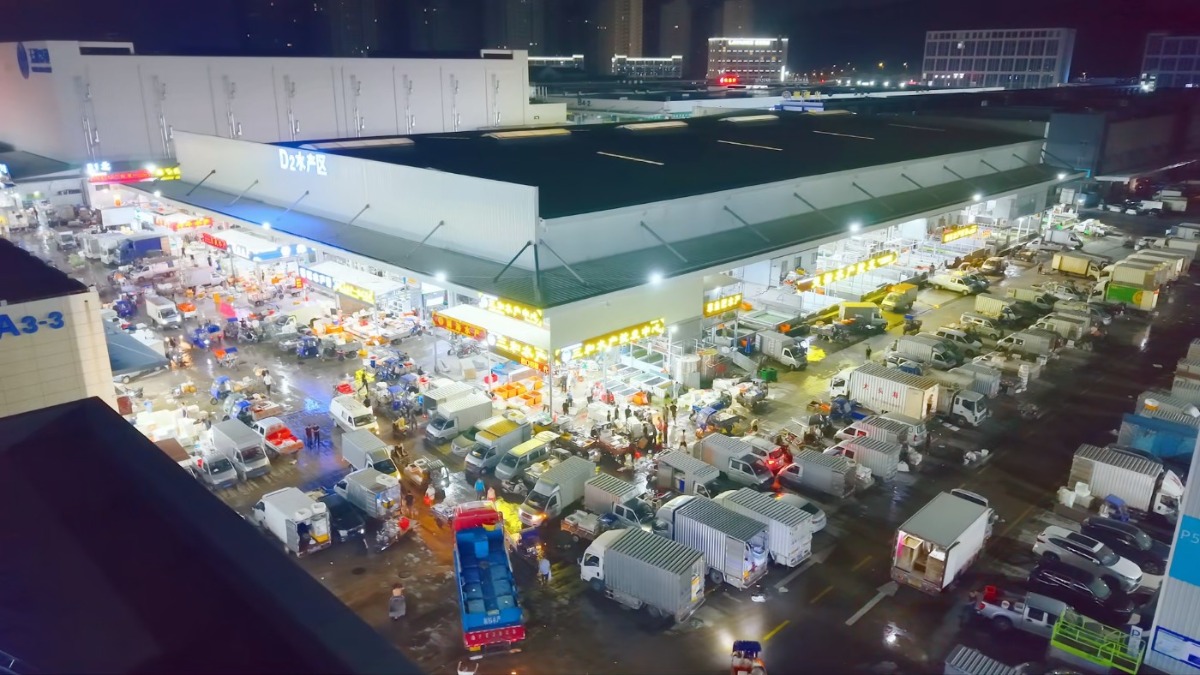 The aquatic products zone at Yuhu Cold Chain (Jieyang) Trading Centre, busy through the small hours
As eastern Guangdong's international cold chain food trading hub, Yuhu Cold Chain (Jieyang) Trading Centre cuts the distance from quay to table to the shortest possible.
Loaded into live-haul trucks fitted with oxygenation and water circulation systems, the catch can reach the centre's aquatic products zone in about an hour. Stripping out the layers of wholesale handling in between means less loss and steadier freshness.
By 2 a.m., the aquatic products zone is at peak trading. Buyers move between more than 100 stalls, inspecting goods, checking quality, weighing and negotiating.
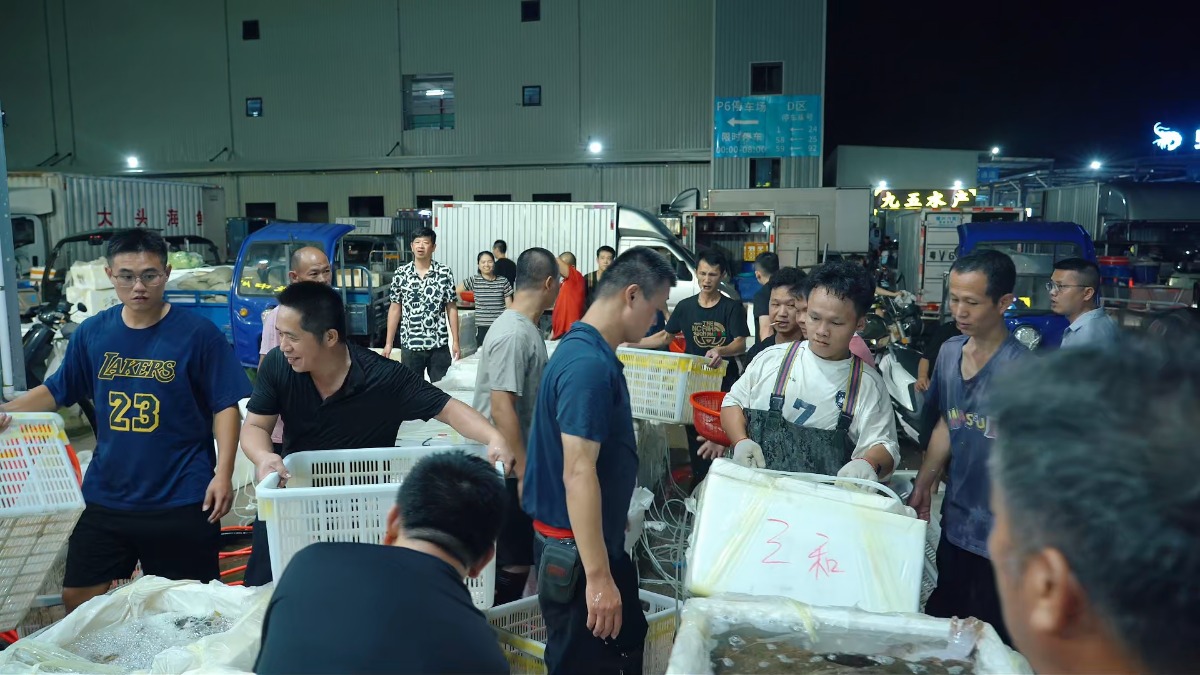
In January this year, following full occupancy of the vegetable trading zone, the aquatic products zone began trial operation, adding a key node to the region's end-to-end “source to table” chain for agricultural produce. Stall occupancy and daily trading volumes have climbed steadily since, and the concentrated arrivals of the open season have lifted both footfall and volume.
“Prices really have come down these past few days. Today I'm mainly looking at blue swimming crab and squid — my customers' sales are picking up,” said Huang, a seafood wholesaler from Meizhou who comes twice a week. “Once the truck is loaded it goes straight out on the cold chain, and the catch is still alive when it reaches the customer.”
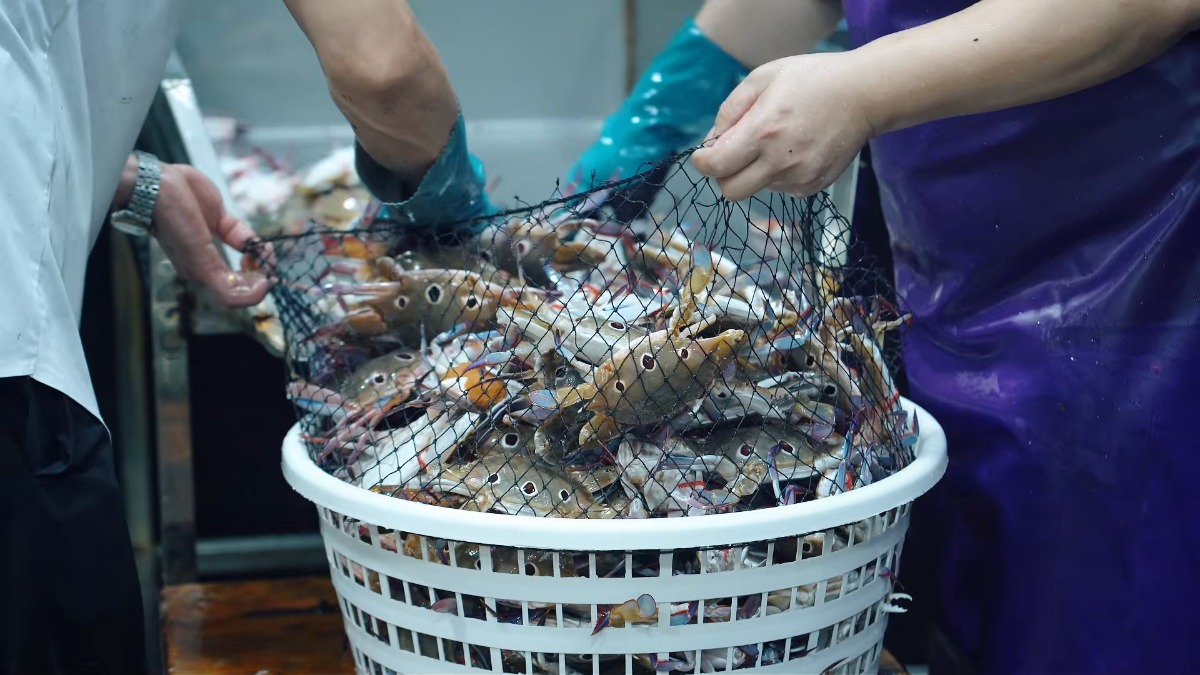
“For Chaoshan cooking, seafood is the lifeblood,” said Huang, who runs a Chaoshan open-air seafood restaurant. “We've just updated the menu, so I'm picking up small yellow croaker, mantis shrimp and round scad for our raw-marinated and cold-dish signatures. The range here is wide, supply is steady and prices are reasonable — I no longer have to visit several markets to fill an order.”
“The Spanish mackerel we brought in this time is excellent quality,” said Chen, who runs a stall in the aquatic products zone, sorting as he spoke. “Since the season opened we work from the small hours through to the following morning. It's tiring, but it's satisfying.”
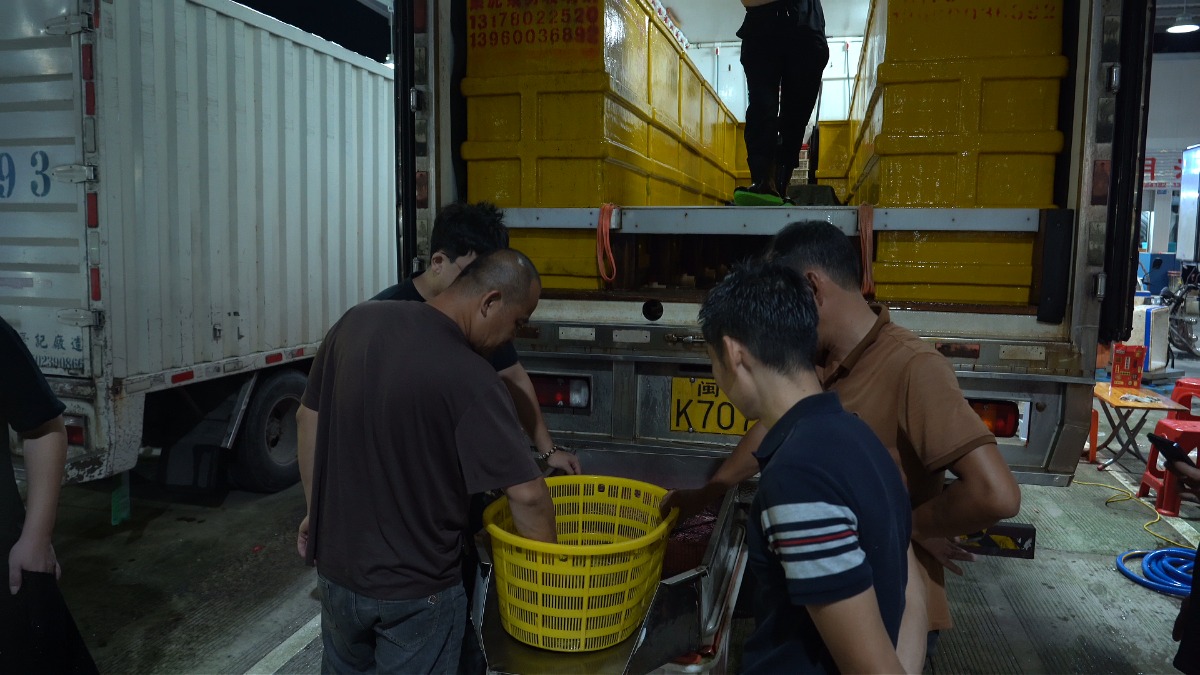
“We're a local supermarket chain and we come in most days — aquatic products, fruit and vegetables, frozen goods,” said Lin, a procurement manager. “Inspection, selection, cold chain and delivery are handled in one place. I don't have to arrange my own transport, which saves both hassle and cost.”
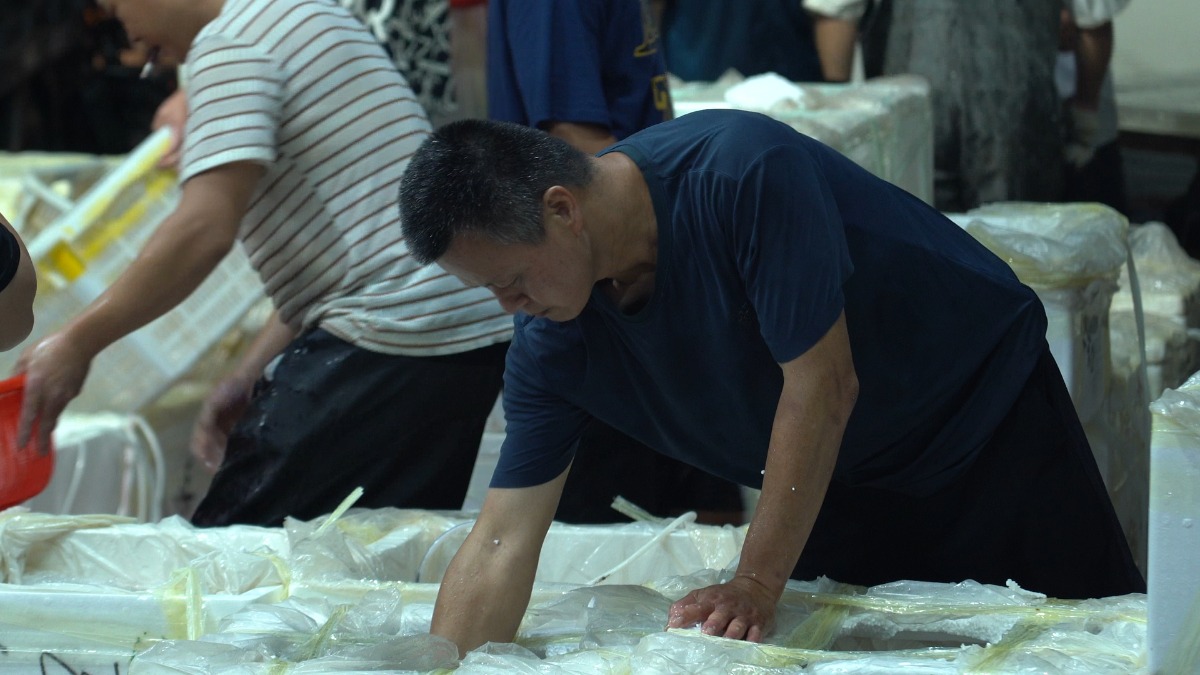
Alongside open-season staples such as greasyback shrimp, swimming crab, small yellow croaker, red seabream, golden pompano, blue swimming crab and squid, buyers can also source premium lines in one stop: red rose grouper, king crab, coral trout, yellow roe mud crab, roe-packed mantis shrimp and live sea urchin.
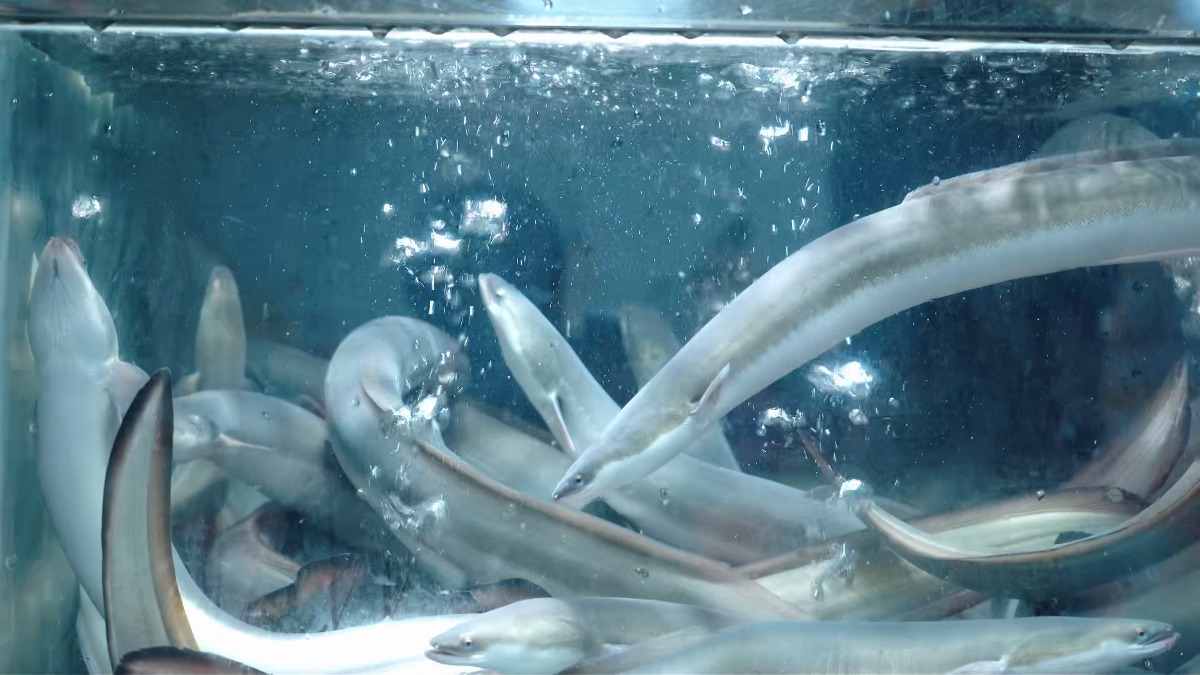
Yuhu Cold Chain (Jieyang) Trading Centre sits at the meeting point of Chaozhou, Shantou and Jieyang, with multimodal road, water, air and rail links reaching across eastern Guangdong, southern Jiangxi and western Fujian. Catch from the ports arrives the same day, and more than 100 stalls make one-stop sourcing possible — which for buyers means fewer intermediate steps, more consistent quality and better control over procurement costs.
Inland Harvest: Peak Season at the Ponds
Almost at the same moment, a thousand kilometres away in Xiangyang, sustainable aquaculture is entering its autumn and winter harvest peak. Freshness here comes not from river fishing but from the ponds — harvested and supplied direct.
At first light, mist still lies over the water. Fishermen haul up the sunken nets and bighead carp, bream and freshwater shrimp break the surface one after another.
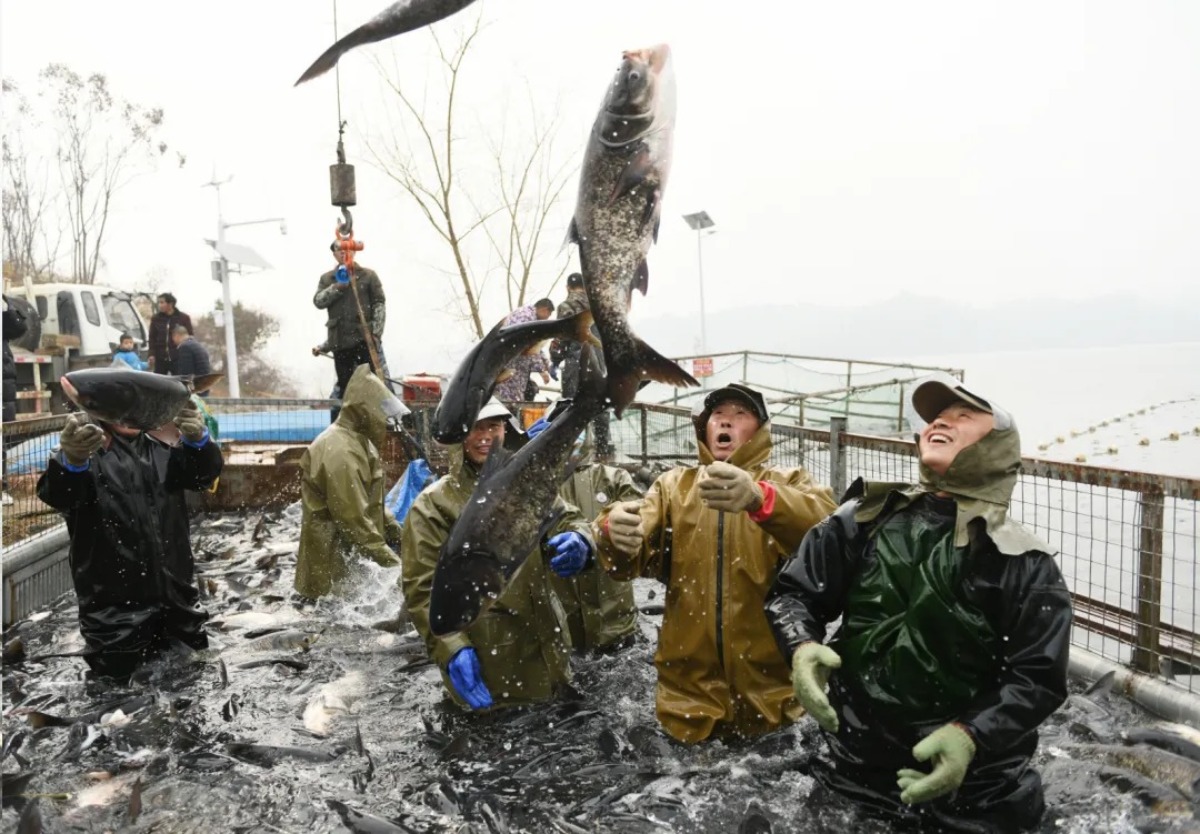
Hauling the nets at the ponds (Image: Xiangcheng Xinwen / Xiangcheng News)
This freshly harvested stock sets out from farms in Yicheng, Xiangzhou and along the Huilong River in Wolong for a single destination — Yuhu Cold Chain (Xiangyang) Trading Centre.
A ten-year fishing ban has applied to the Hubei stretch of the Han River main channel since 2021, so every freshwater product at Yuhu Cold Chain (Xiangyang) Trading Centre comes from sustainable aquaculture. Yicheng bream, farmed soft-shelled turtle, snakehead, freshwater shrimp, Chinese mitten crab, Huilong River bighead carp, yellow catfish, loach — these geographically indicated, sustainably farmed products are appearing in growing volumes on wholesale markets and restaurant purchasing lists.
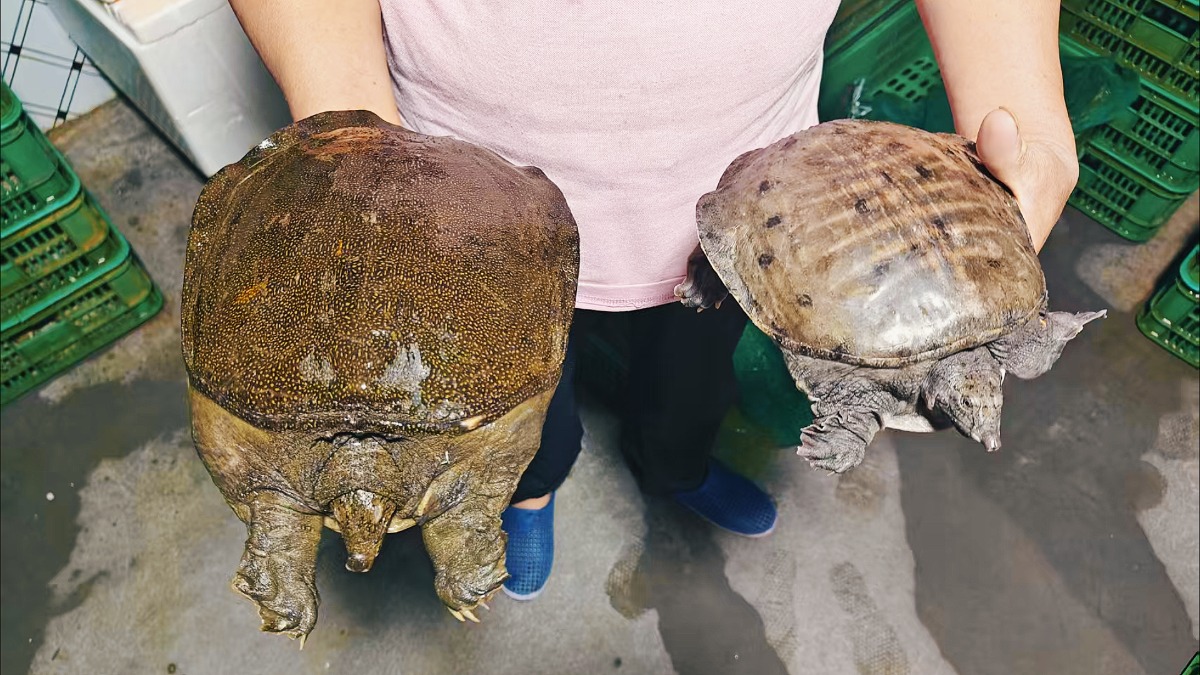
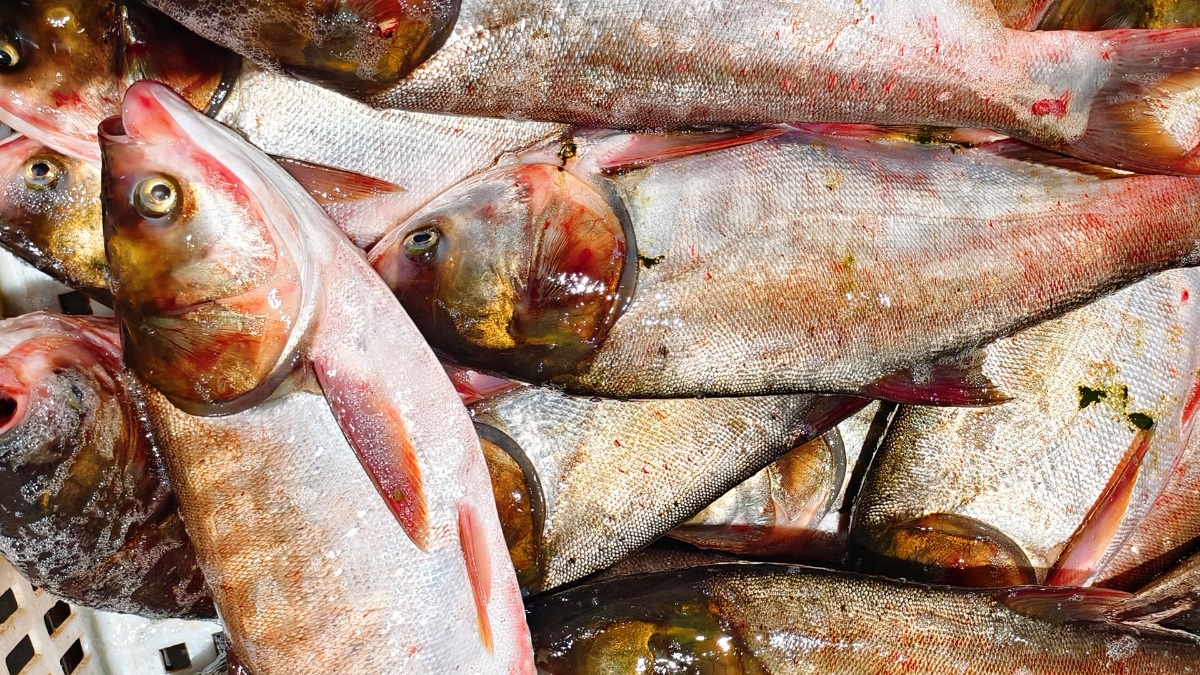
The centre's aquatic products zone began trial operation in May this year with full merchant occupancy on day one. Daily freshwater fish trading volumes have held above 300,000 catties (approximately 150 metric tons), quickly making the site north-western Hubei's live fish distribution hub.
“Bream and yellow catfish are the signatures at my restaurant,” said Liu, a restaurant buyer. “The centre deals directly with the ponds, so the fish is fresh and comes in consistent sizes. I don't have to visit several farms to fill an order.”
Huilong River bighead carp, one of the zone's regularly stocked lines, has become a standout, winning over buyers on the strength of its sustainable credentials. Yuhu Cold Chain (Xiangyang) Trading Centre is located in the Fanxi Logistics Park, Fancheng District, 28 kilometres from Liuji Airport and 34 kilometres from Xiangyang East Station. A key node in Yuhu Cold Chain's central China network, it is equipped with multi-temperature cold storage covering live holding, chilled and frozen requirements, supplying restaurant customers — Hubei cuisine, Sichuan–Chongqing hotpot, fish-head and soft-shelled turtle specialists — and traders across the food supply chain.
Centres in Concert: A National Cold Chain Network Takes Shape
From the South China Sea coast to the Han River basin, Yuhu Cold Chain has built an aquatic supply network spanning both marine and freshwater sources, anchored on its trial-operation centres in Guangzhou, Jieyang, Chengdu, Wuhan and Xiangyang. Kept fresh at every stage and supplied directly to foodservice customers through a one-stop sourcing and sales system, catch from different waters reaches tables in more cities, faster.