On 8 July, Huang Chuping, Chairman of the Standing Committee of the Guangdong Provincial People's Congress, led a delegation on a field visit to Yuhu Cold Chain (Jieyang) Trading Centre, focused on “advancing integrated development of primary, secondary, and tertiary industries in rural areas and high-quality development of the county-level economy.” The delegation inspected the centre's construction and operations on site, reviewed the end-to-end development of its specialty industries, and gained an in-depth understanding of the centre's innovative achievements.
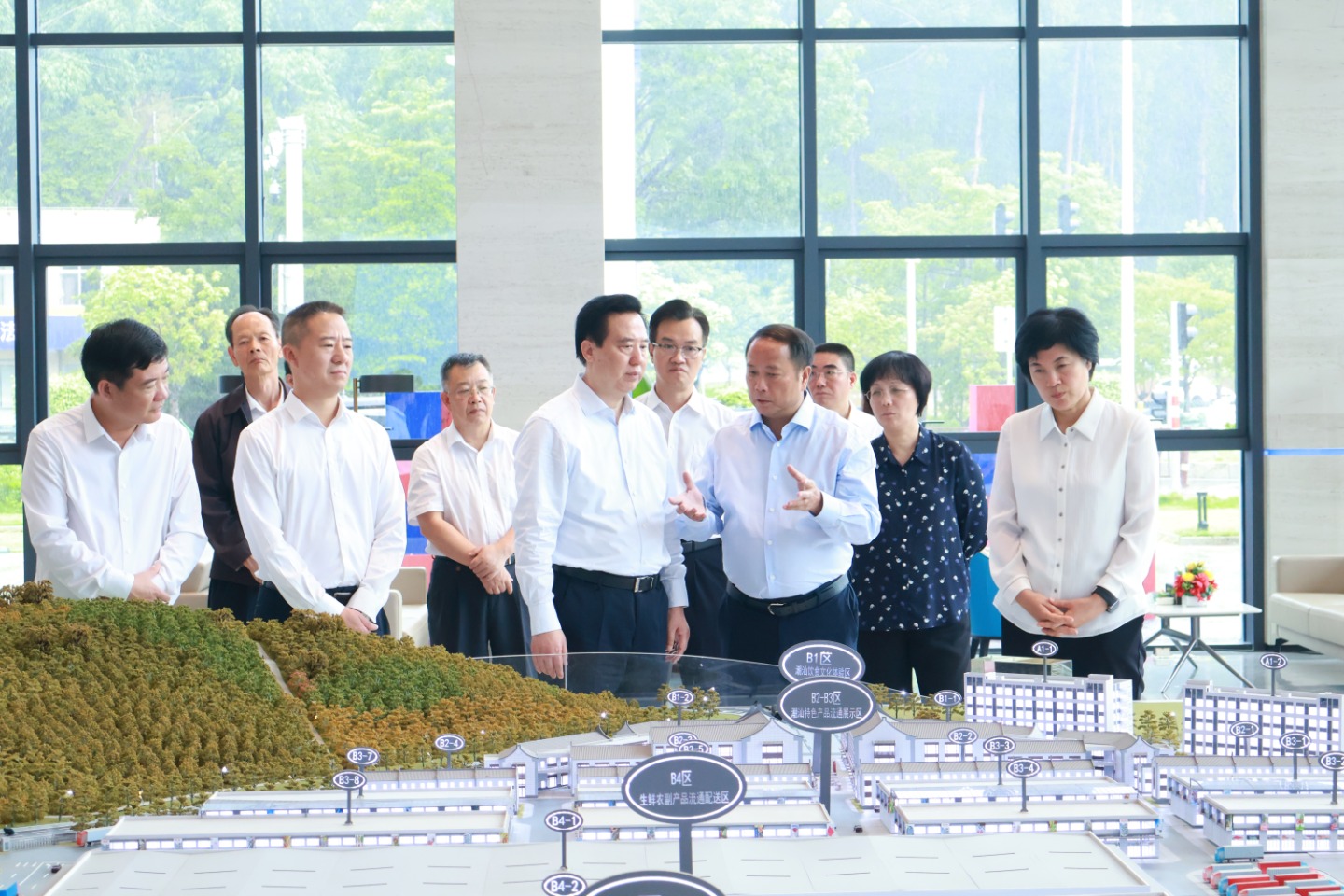
Huang Xiangmo, Chairman of Yuhu Group (Hong Kong), extended a warm welcome to Huang Chuping and the delegation. He noted that since launching the Yuhu Cold Chain Greater China Strategy in 2020, Yuhu Group has built and brought into operation ten digital and intelligent cold chain trading centres nationwide, providing safer, higher-quality food supplies for 800 million people. The Jieyang Trading Centre is Yuhu Cold Chain's second key project in Guangdong Province, integrating the circulation of fresh agricultural produce, international cold chain food trading, Chaoshan culinary culture experiences, cold chain food processing, and smart warehousing and logistics. The centre carries a threefold strategic mission: serving regional livelihoods, reshaping distribution patterns, and connecting global resources. Since the vegetable trading zone entered trial operation in May 2025, achieving a 100% occupancy rate, the aquatic products trading zone has smoothly followed suit, beginning trial operation this January — making the centre an important project supporting local livelihoods in Jieyang. Once fully operational, it is expected to serve close to a thousand upstream and downstream enterprises across the agricultural produce distribution chain.
In terms of innovative practice, Yuhu Cold Chain applies an end-to-end approach to help Jieyang implement a coordinated ‘three-industry’ development path: ‘empowering primary industry’ by expanding the reach of agricultural produce sales and boosting farmers' incomes; ‘strengthening secondary industry’ by supporting the prepared meals sector to raise added value; and ‘energising tertiary industry’ by promoting dual circulation of agricultural produce. Leveraging its internationally advanced, high-standard, digital and intelligent cold chain, the centre both ‘brings in’ premium ingredients from overseas and helps Chaoshan agricultural specialities ‘go global,’ achieving a leap from ‘farm-fresh’ to ‘world-fresh.’ He added that Yuhu Cold Chain has consistently placed diversifying food ingredients and safeguarding food safety at the core of its management of cold chain trading centres nationwide. By building digital cold chain trading centres and applying advanced technologies such as IoT temperature control and smart dispatching, the centre fully leverages the advantages of its Online-Merge-Offline (OMO) service model, and works with government and enterprise partners to build a ‘digital and intelligent supply chain community’ — effectively safeguarding food safety, reducing costs and improving efficiency for merchants, and helping the ‘Jienong’ (揭农, Jieyang's regional agricultural products brand) achieve standardised, branded, and globalised development.
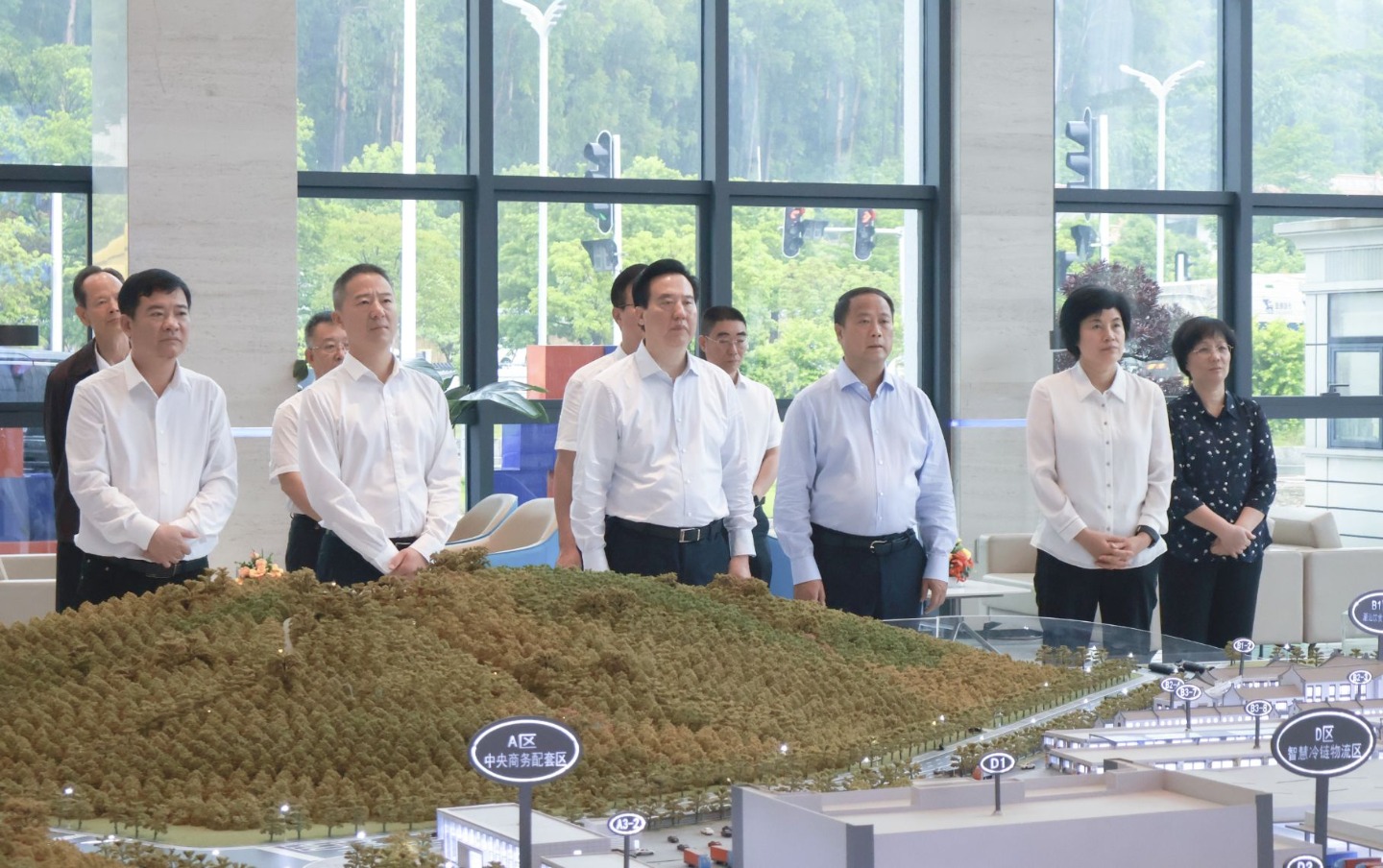
Huang Chuping gave full recognition to Yuhu Cold Chain's exploration and practice in advancing integrated three-industry development and building a ‘digital and intelligent supply chain community.’ He noted that the approach taken at the Jieyang Trading Centre has identified a genuine breakthrough point for industrial integration and captured the key to high-quality development of the county-level economy. From the rapid market formation of the vegetable trading zone to the smooth follow-through of the aquatic products zone, the centre has used market-based operating logic to prove the model's sustainability. Its approach — ‘anchor enterprise leadership, empowerment through digital and intelligent technology, and coordinated development of the three industries’ — offers a replicable model for agricultural modernisation across eastern Guangdong and the province as a whole.
He encouraged Yuhu Cold Chain to continue playing its leading role as an ‘anchor enterprise,’ and, drawing on Yuhu Group's strength in integrating international supply chain resources, to work with the government to upgrade the quality of Jieyang's farming and aquaculture sectors, stimulate production, and genuinely raise the incomes of farming and aquaculture households and merchants in support of local livelihoods. He emphasised that Yuhu Cold Chain's practice demonstrates that when modern supply chain infrastructure reaches the county level, it drives not only growth in transaction volumes but also profound change in production organisation, brand marketing, and the return of talent. Going forward, the Standing Committee of the Guangdong Provincial People's Congress will actively advance the integrated development of primary, secondary, and tertiary industries in rural areas, providing strong support for continuously strengthening the overall competitiveness of Guangdong's counties.
Liu Yahong, Vice Chairman of the Standing Committee of the Guangdong Provincial People's Congress; Xu Hong, Secretary-General of the Standing Committee; Li Shuihua, Chairman of the Rural and Agricultural Affairs Committee of the Guangdong Provincial People's Congress; Li Xiangyu, Deputy Director-General of the General Office of the Standing Committee; and Li Bing, Vice President of Yuhu Cold Chain and Chairman of its Jieyang company, among others, took part in the visit.
(Correspondent: Ye Qianchun)