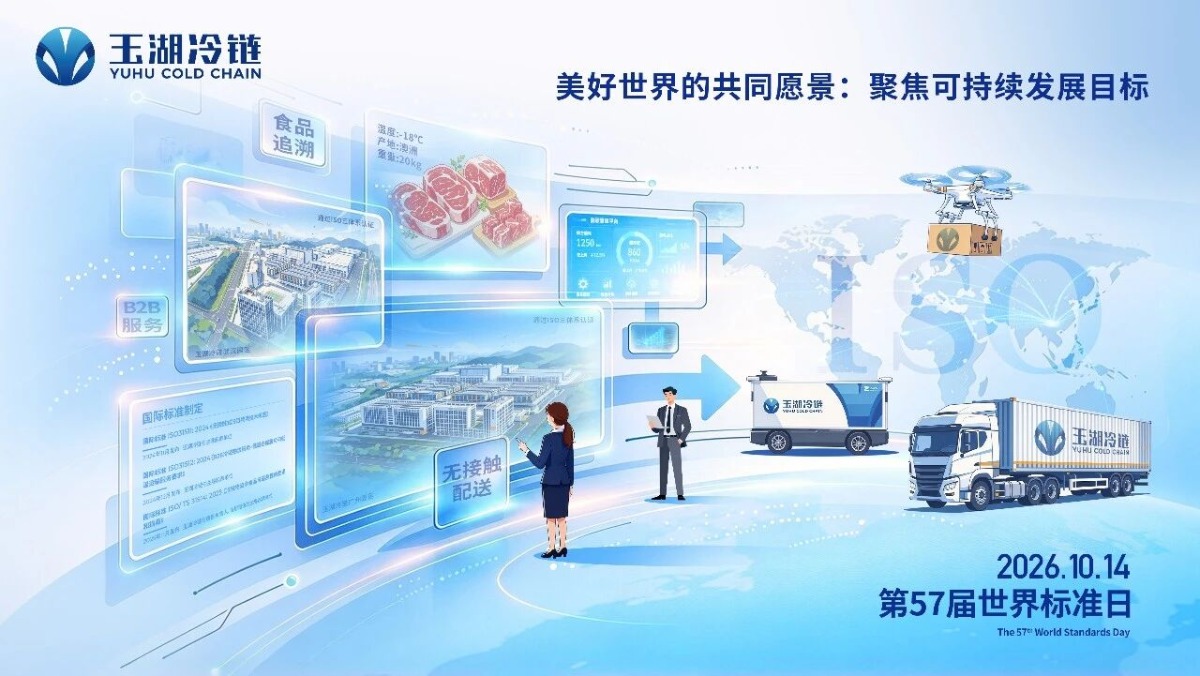
14 October 2026 marked the 57th World Standards Day, which also commemorates the founding of the International Organization for Standardization (ISO). This year’s international theme was “Shared Vision for a Better World: Spotlight on SDG 7 – Affordable and Clean Energy”. The Standardization Administration of China (SAC) issued a congratulatory message calling for standards to support sustainable development and help realise this shared vision. As both a standard-setter and a practitioner in cold chain logistics, Yuhu Cold Chain has made major breakthroughs in international standardisation in recent years. Having contributed to three published ISO standards, the company has built a portfolio of international standards covering three core scenarios — contactless delivery, B2B services, and food traceability — and continues to share China’s expertise with the global cold chain industry.
Leading the Way: Three International Standards That Fill Global Gaps
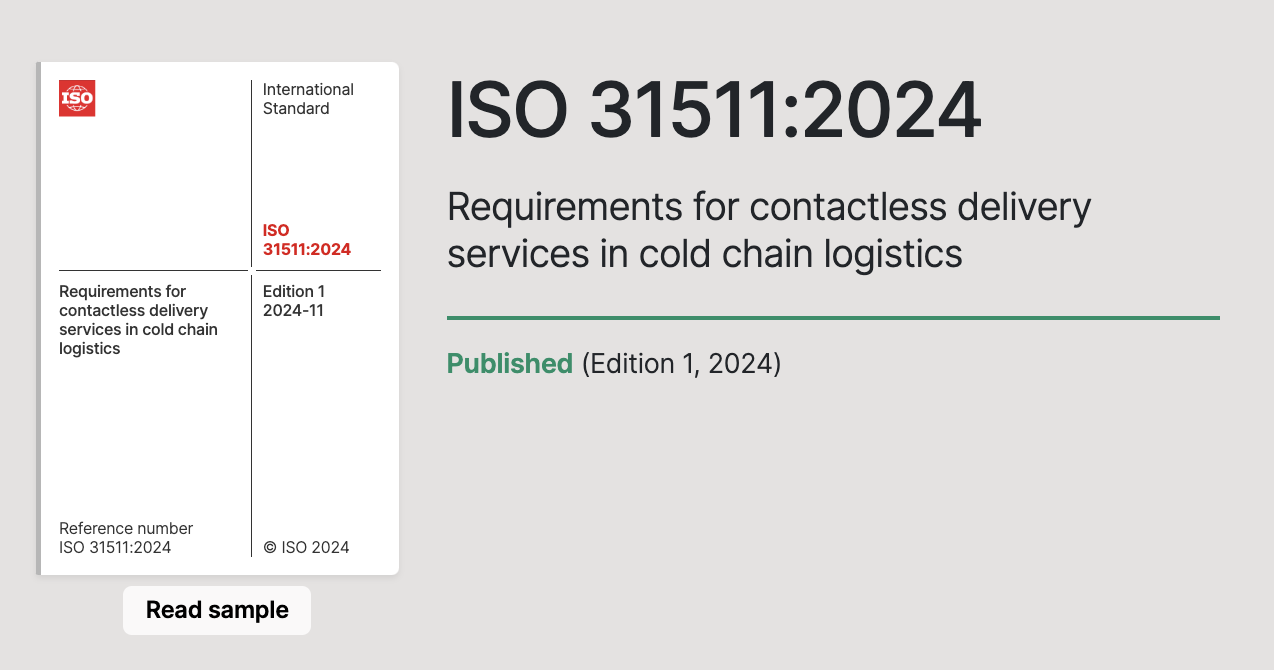
In November 2024, ISO 31511:2024 Requirements for contactless delivery services in cold chain logistics, drafted under Yuhu Cold Chain’s leadership, was published — China’s first international standard in cold chain logistics. The standard gives the global cold chain sector safe, efficient operating guidelines and significantly reduces the risk of cross-contamination as food moves through the cold chain. CCTV’s flagship evening news programme Xinwen Lianbo ran a feature on its global relevance for safe cold chain delivery in the post-pandemic era.
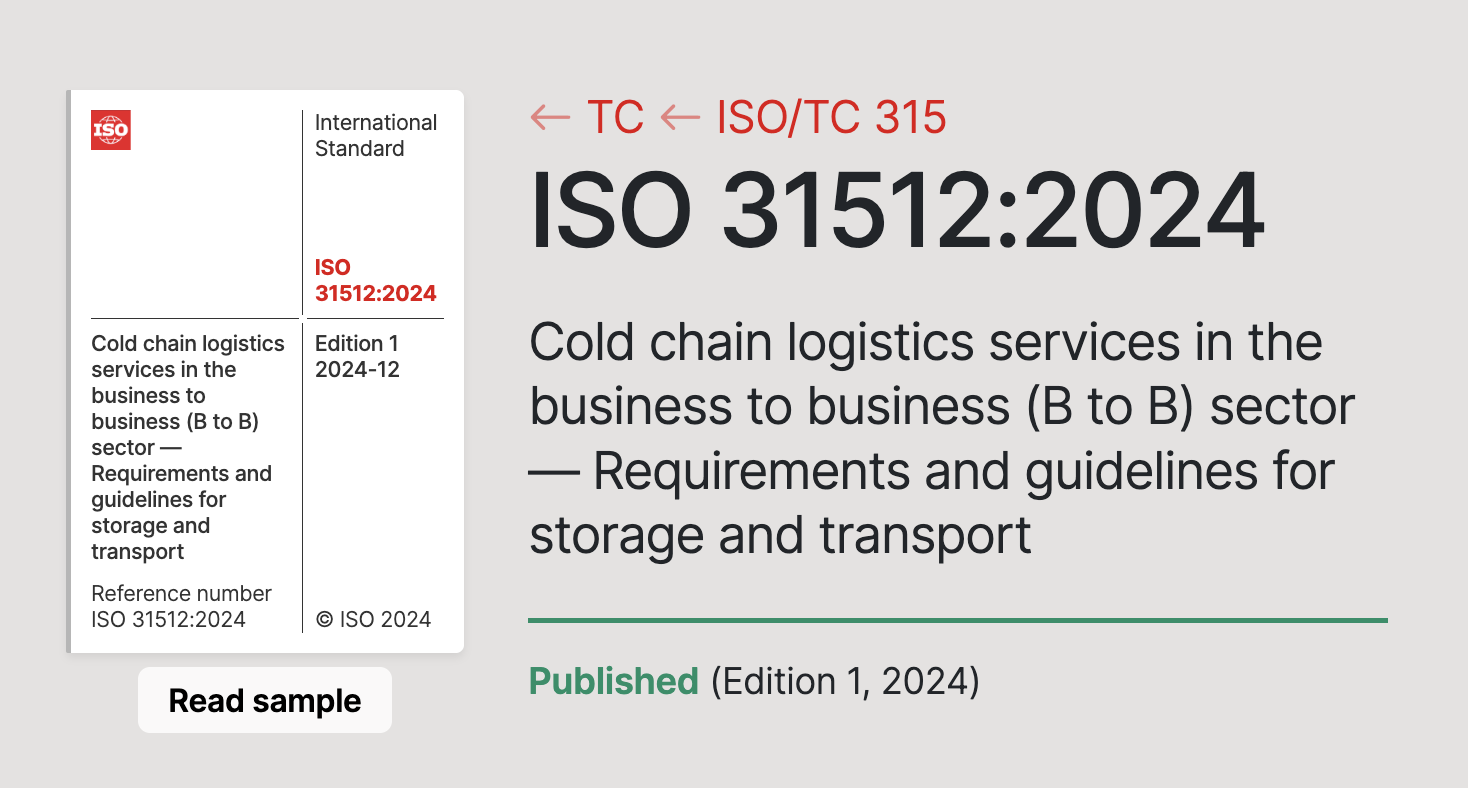
In December 2024, Yuhu Cold Chain played a key role in developing ISO 31512:2024 Cold chain logistics services in the business to business (B to B) sector — Requirements and guidelines for storage and transport. The company contributed case studies of integrated warehousing and transport management from Chinese B2B cold chain enterprises, offering a Chinese model for the high-quality development of B2B cold chain services worldwide.
In November 2025, ISO/TS 31514:2025 Requirements and recommendations for food traceability in cold chain logistics was officially published. Yuhu Cold Chain was the first-listed lead drafting organisation, with Huang Zhenghong, Executive Director of Yuhu Group (Hong Kong), serving as project leader. Developed over 27 months with input from experts in Singapore, Japan, France, Malaysia, South Korea, the United Kingdom, India, and other countries, the standard fills a global gap in end-to-end traceability standards for cold chain food. It sets out requirements and recommendations for building food traceability systems in cold chain logistics, covering every stage — transport, warehousing, and loading and unloading — through to the end consumer, and gives cold chain logistics providers worldwide a unified technical foundation for traceability.
Together, the three standards form a portfolio spanning contactless delivery, B2B services, and food traceability — a sign that China’s hands-on cold chain experience is steadily becoming internationally accepted practice.
From Standards to Operations: International Standards Take Root in Yuhu’s Parks
Standards are only as valuable as their application. By adapting international standards to local conditions and applying them across its nationwide network, Yuhu Cold Chain has built them into the operating procedures of its parks across China.

▲ Fully automated high-bay warehouse at Yuhu Cold Chain (Guangzhou) Trading Centre
On the hardware side, cold storage at Yuhu’s Guangzhou, Chengdu, and other parks covers the full temperature range, from ambient down to -60°C. IoT technology enables rapid response to temperature fluctuations, preventing cold chain breaks, cargo loss, and food quality issues. On the software side, the parks provide real-time temperature monitoring and traceability throughout, ensuring that traceability data is accurate and verifiable from source to end user.
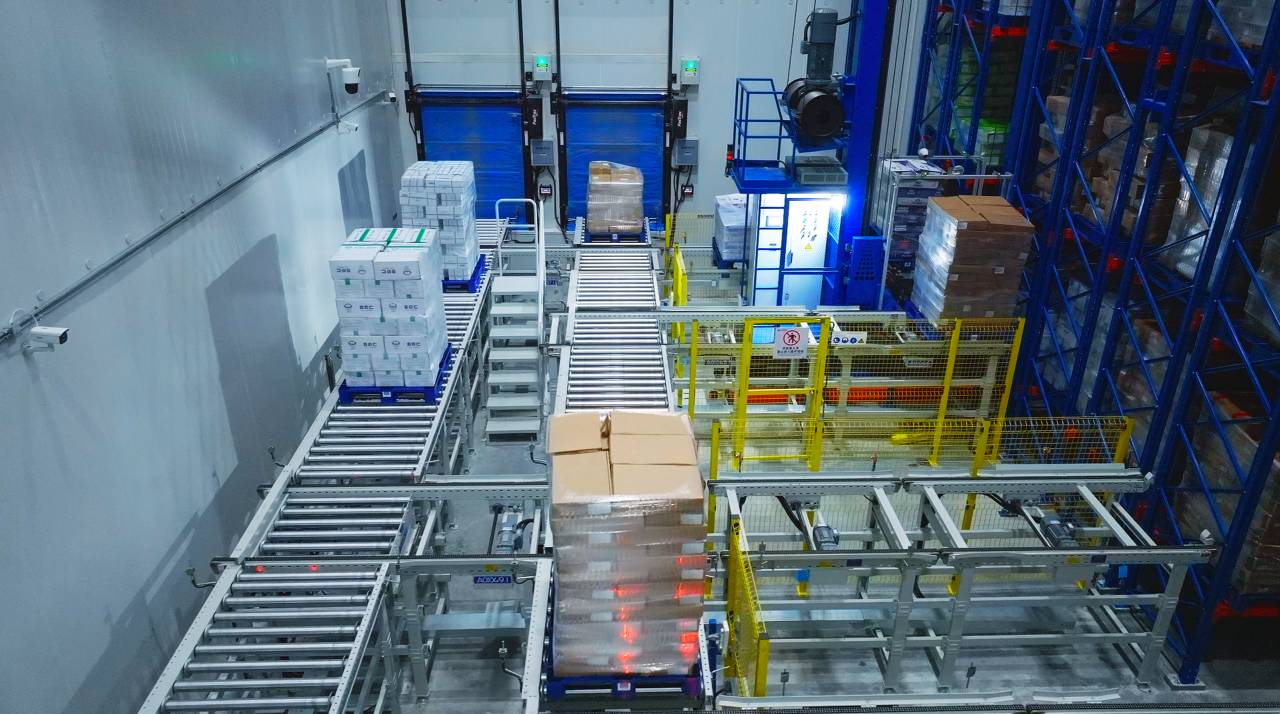
▲ A fully automated high-bay warehouse at a Yuhu Cold Chain park
The Guangzhou park obtained ISO 9001, ISO 14001, and ISO 45001 certification in September 2024, and in December 2025 became a pilot unit for the national standard Requirements for Traceability Management of Food Cold Chain Logistics. In October 2026, the Wuhan park followed with the same triple ISO certification. This shows that Yuhu Cold Chain’s standardised management system, guided by international standards, is being rolled out across all its parks, giving the industry replicable models for cold chain management.
Going Green: Standardised Practice in Support of Clean Energy
With this year’s World Standards Day focused on affordable and clean energy, Yuhu Cold Chain continues to advance standardised practice in green, low-carbon operations. Cold chain parks are major energy consumers: cold stores run around the clock, and electricity is a core cost for park operators and merchants alike. At Yuhu Cold Chain parks, a smart energy management system ensures every kilowatt-hour is accounted for. It monitors water and electricity use in real time, while dynamic load-balancing technology automatically optimises energy allocation by time of day and by demand in each area.
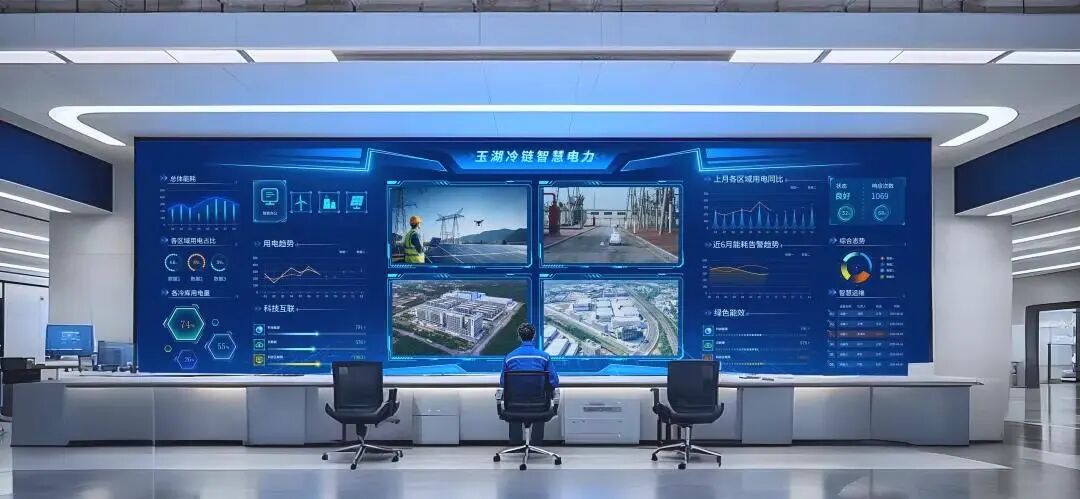
▲ Yuhu Cold Chain’s smart power system
Clean power is gaining pace too. Early this year, solar PV projects at the Guangzhou, Chengdu, and Wuhan parks all came into operation. With over 160,000 square meters of panels, they generate more than 23 million kWh a year — enough to power over 10,000 households for a year — and are expected to cut emissions by 16,000–20,000 metric tons of CO₂ equivalent annually.
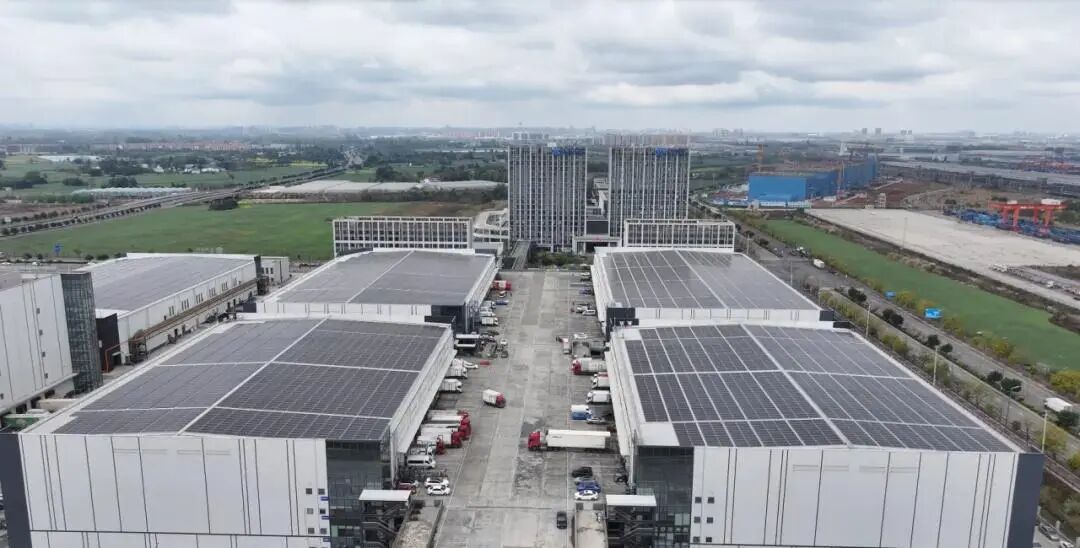
▲ The Chengdu park has installed over 80,000 square meters of solar panels, making it one of the first large-scale commercial and industrial PV projects in China’s cold chain sector.
All of Yuhu Cold Chain’s operational and under-construction parks are certified as national First-Grade (Three-Star) Green Warehouses. The Guangzhou, Chengdu, Wuhan, Jieyang, Meishan, Xiangyang, Changsha, Tianjin, and Nanjing parks have also each received the Hong Kong Green and Sustainable Contribution Awards, reflecting growing industry recognition of the company’s green initiatives.
From helping shape international standards to putting them into practice on the ground, Yuhu Cold Chain is bringing Chinese solutions to the high-quality development of the global cold chain industry. Building on its expertise in cold chain technology and park operations, and on its existing portfolio of international standards, the company will continue to embed standards in day-to-day operations, refine replicable Chinese cold chain solutions, and drive the development of international standards in more specialised fields — harnessing the power of standardisation to safeguard food safety worldwide.